Showing posts with label business. Show all posts

How to increase investment in micro-enterprises (and get your money back)

This blog was orginally posted on CARE Insights.


Today CARE has submitted written evidence to the International Development Committee (IDC) of the House of Commons on our peer-to-peer lending network, Lendwithcare. (For a snappier and more entertaining overview of Lendwithcare, see our new Christmas animation above.) The IDC is currently looking at jobs and livelihoods and is interested to understand more about the role that a relatively new way of funding micro-enterprises can play in generating growth and jobs in developing countries.


Lendwithcare.org has been hugely successful since its launch four years ago, and now supports over 14,000 MSMEs by engaging online with over 18,000 lenders who have each, on average, loaned £35, raising nearly £5 million in the last four years. These really are loans – almost all are repaid within the agreed timescale. To date, only death and major disasters, like Typhoon Haiyan, have prevented our microentrepreneurs from repaying. Of course, our committed lenders very frequently recycle their loans to other entrepreneurs, keeping money in the system and reaching more businesses.

Lenders find Lendwithcare a compelling proposition: they can choose who to lend to, based on detailed information on the individual and their business plans, they get regular feedback on progress, and they know that they are helping resourceful individuals lift themselves and their families out of poverty. And they get all of this within a web experience in their own language, culture and currency. The other compelling aspect is that, when you put money into Lendwithcare, 100% of the money goes to the entrepreneur who is borrowing – CARE does not take a slice off the top. Rather, our modest administration costs are met from other funding within CARE, and until recently, by sponsorship from the Co-operative Group.

The opportunity (and the key issue)

There is a lot of scope for expanding Lendwithcare’s operations – there is certainly no shortage of small enterprises requiring loans. And we believe that there are many more microfinance institutions out there who are likely to meet our (demanding) criteria. We know this because Lendwithcare only lends in nine countries, compared to the 80 countries in total in which CARE International works.

We also believe that there are considerable opportunities for expanding the lender community of the Lendwithcare model. For instance, we believe that it is likely to be successful in other European countries where there already exists a CARE office. As this includes Germany, France, Austria, Norway and Denmark, there is a lot of opportunity. We would also like to explore rapidly developing countries such as India and Brazil. We know that lenders find it important to link with an organisation in their own country, for reasons of language, currency, tax laws and cultural affinity.

All of which would take some more investment – but we know that we can raise loans to the value of seven times the marketing and administration investment. This is a powerful win-win-win between CARE’s mission to end poverty, an individual’s desire to use some of their own hard-earned cash to help others, and entrepreneurs’ drive to build strong businesses to lift themselves and others out of poverty.

So now all we have to do is find the cash to pay for some administration and marketing…

By Gerry Boyle
CARE International UK's Senior Policy Adviser on Private Sector Engagement

Download our written evidence in full here.

Lendwithcare microloans making big differences in Togo, West Africa

A couple of weeks ago, Ajaz (Lendwithcare's Microfinance Advisor) and I headed out to Togo and Benin in West Africa to conduct the annual evaluation of our microfinance partners. Whilst there we also met some of the entrepreneurs receiving Lendwithcare loans.

 - Nancy Thomas, Lendwithcare Executive


If you follow the debate on the impact of microfinance, you will be aware that one of the criticisms often put to microfinance practitioners is that microcredit only serves to support subsistence and/or unscaleable businesses. However the following two entrepreneurs I met on our recent visit to Togo showed me quite the contrary.

Meet Philippe Adanglo ...

Philippe in his workshop 
When we visited Philippe’s shop/training school on a hot and dusty day in February, it was an absolute hive of activity. In the main portion of his workshop, 15 young apprentices sat busily working away on clothes orders. Philippe currently owns six manual sewing machines (one of which he bought with a small loan funded by Lendwithcare lenders) so those who were not operating the sewing machines, assisted by tacking and preparing the material for sewing. At the side of his workshop, in an extended area, we were introduced to another 15 apprentices who were gluing, ironing and putting finishing touches to various items. 

Philippe welcomed us in with a big smile and open arms. We did not realise from his modest loan request quite how impressive his business actually was. He set-up his own tailoring business with three helpers about 14 years ago after learning the trade from his uncle and receiving a diploma as an apprentice. He now, with the help of 35 local apprentices, makes 100s of uniforms for schools and companies as well as the occasional bespoke item. And all of this on manual sewing machines! Philippe told us that he and his staff meet their current demand comfortably and he is planning on expanding operations in the near future. In fact, in the shorter term Philippe has plans to open a haberdashery next to his workshop so he can sell cloth and accessories alongside his tailoring services. 

Apart from building a successful business, what really impressed us about Philippe was the opportunity his business now provided for numerous young people from the local area through his apprenticeship programme. In total he has trained 80 people in the trade, all of whom received a diploma and graduation ceremony once they completed their apprenticeship and most of whom have gone on to set-up their own businesses. Philippe trains all of the apprentices himself and is helped by his more experienced apprentices as new people join. Philippe has now taken out a second small loan to buy more material in bulk so they can meet the growing demand of their customers and get a better price by buying in bulk.

Philippe & apprentices


And Akuwa Keke ...
Akuwa and I (Nancy)


We met Akuwa the day after we visited Philippe's tailoring shop and were very impressed by her obvious entrepreneurial skill and spirit. After her husband died ten years ago Akuwa knew she needed to find a way to adequately meet the needs of her two daughters so she started to consider different income-generating activities. She used to sell porridge from a stall on the street but this did not provide her with a sufficient or stable income so, with encouragement from her sister, Akuwa slowly started to expand and diversify her trade. She now buys a variety of goods from the port and grand market in Lome (the Togolese capital) in bulk and then sells them at retail to people in the local vicinity. These goods range from colourful cloth and children’s toys to furniture and pianos. Akuwa visits the port and sees what is being imported and which items she thinks will sell well in the area where she lives and buys these items in bulk. Akuwa told us the goods she sells come from all over the world, particularly China. 

And Akuwa's business ideas do not stop there. In addition to selling these goods, Akuwa also grinds corn to make a type of powder popularly used to make soup. She exports large bags of this corn powder via middlemen at the port to Europe and other parts of the world. Akuwa hires three people to help her with this activity since it can be a laborious task preparing the corn into the powder. The list of activities Akuwa is engaged in is extensive and before we were about to leave she also wanted us to try some of the frozen yoghurt she makes and sells on the street to passersby. She sells these for 2 cents a bag and they are delicious!

Ladies grinding corn at Akuwa's home
 
It was an absolute delight to meet both Philippe and Akuwa (and the 13 other lendwithcare entrepreneurs who welcomed us into their homes and their businesses) during our trip and although I am not suggesting these two examples represent all recipients of microcredit, I do think it extremely important we avoid viewing microcredit and all its recipients homogeneously. 


To learn more about lendwithcare entrepreneurs visit our website www.lendwithcare.org or follow us on Twitter or Facebook for latest news and discussion.


Video updates from Togo part three: “A small loan is like oil in an engine; it allows people to move forward"

Finally, part three of Tracey's video updates from her April 2013 trip to Togo is here! Here are also parts one and two for some context.

To round off my blog/video updates from Togo, I wanted to share with you some lasting impressions from the trip.

The passion and commitment of the WAGES staff

Many of the office staff began their careers as Loan Officers, including the General Manager, Ramanou Nassirou who, when talking about the entrepreneurs said “most of them know how to run their business, we just provide them with a small loan to get them started - a small and affordable loan is like oil in a car engine; it allows people to move forward". 

I have already written about how WAGES supported clients who lost everything in the massive fireswhich swept through the great markets of Lomé and Kara last year and this demonstrates further the commitment that WAGES have to improving the lives of their clients. 

The importance of a good loan officer
 A good loan officer will take time out of their incredibly busy work schedules to support entrepreneurs beyond simply disbursing loans and collecting repayments. This makes a huge impact on the lives and successes of the people they serve and their businesses  and I saw it time and time again with the WAGES' staff.

Yaya’s story: Yaya was one of the very first entrepreneurs to receive funding from Lendwithcare back in 2010.  Yaya told me there has been a big difference between before the loans and now.  He is able to send his children to school, they eat three meals a day and his business has ensured the health of his family. Recently one of his children was sick but he was able to afford to pay the hospital fees – something he’s sure he wouldn’t have been able to do before.


What access to finance really means
Access to financial services such as loans and savings accounts are absolutely vital to people who would otherwise never be able to move their business beyond the most basic hand to mouth existence. 

Assiahame’s story: I met Assiahame at her small hairdressing salon in a side street of Atakpamé.  She told me that her salon alone didn’t have enough regular customers, so her loan enabled her to diversify into selling jewellery, bags as well as hair pieces. Before finding out about WAGES she had previously used a money-lender who charged her 50% interest on her loan and used to hassle her for the repayments.

And that like any small business, there are many challenges and although access to credit helps lessen the burden, it is not always enough ...


The need to diversify when things get tough
William’s story: I had met William a year ago and was struck by how important he is to his village, near the town of Atakpamé.  Not only is William a fisherman employing twelve people in the village, he is also the local Pastor.  This year when I met William he was starting to diversify his income sources as it is becoming harder and harder to make a living from fishing.  He told me that fishing was only good for three months of the year and it was becoming increasingly difficult to make that income last.  As is typical of men like William, rather than just accepting the situation he was thinking of other ways in which he could earn a living.  He had just started a very small business, selling musical instruments and has now taken a loan so he can grow this business.


I hope you have enjoyed this small window into the lives of some of the entrepreneurs featured on lendwithcare.org.  I really enjoyed meeting them and hearing their stories.

Finally, I would like to thank everyone who made my time in Togo so enjoyable and rewarding, especially Felix Kilinglo and the Loan Officers from the Atakpamé branch; Forgive, Lolonyo, Sylvain, Success, Dodji, Emmanuel and Esso and Mensah Dakevi, the WAGES lendwithcare officer and Sambieni Yarikoi who accompanied me for all my time in Togo and were the perfect example of the warmth and hospitality of Togolese people.

Tracey Horner, Head of Lendwithcare
  

Making loans & changing lives for three years

Three years ago CARE International UK launched its innovative peer-to-peer lending platform, lendwithcare.org with the aim of helping people in developing countries work their own way out of poverty and to promote financial inclusion among low-income sectors of the population. Through the lendwithcare website, lenders can make small loans to entrepreneurs in developing countries to help them start or expand a small business.  

Since launch and with the fantastic support of The Co-operative (who put together and designed this infographic) and our wonderful lenders we are proud to say we have have achieved so much ...


Making loans and transforming lives in Pakistan


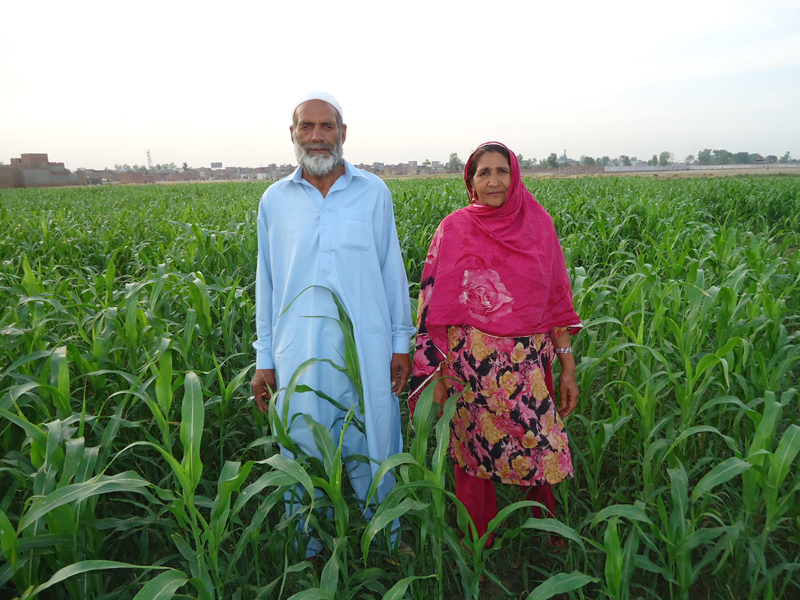
Safiya and her husband, Khuda
Picture: © CARE
It is quite fitting that as the holiest month in the Muslim calendar, Ramadan, draws to a close this week and Muslims around the world celebrate the arrival of the new moon, we at lendwithcare.orgwill be celebrating the successful inclusion of our first Islamic Microfinance partner, Akhuwat in Pakistan.


Originally posted on the Department for International Development UK website, reposted here.


Like ‘traditional’ microfinance, Islamic microfinance is the provision of basic financial services to the poor or those on low incomes. However, what differentiates Islamic microfinance from its more ‘traditional’ form is that these basic services, be it loans, savings or insurance, must conform to Islamic financing principles. More specifically these principles include, financial support for socially productive activities only, no speculation or excessive uncertainty, prohibition of Riba or unjust gains, which includes, but is not limited to, interest and no exploitation by the stronger party against the weaker


And although lendwithcare.org, as part of international development charity CARE International UK, has been supporting microfinance institutions across the developing world since September 2010, our partnership with Akhuwat now lets people in the UK lend their money to an organisation that specifically complies with these principles.

Since April 2013, people in the UK have been lending small sums of money to micro-entrepreneurs in the Punjab region through our peer-to-peer lending website and so far the partnership is proving to be a great success and incredibly popular with the UK public. In fact, in just four months lendwithcare lenders have supported 230 self-starting entrepreneurs in Pakistan to grow or start a small business, providing them with the opportunity to lift themselves, and their families, out of poverty.


Naseem Akhtar is an example of one of the entrepreneurs supported by lendwithcare lenders over the last four months.

Tailor, Naseem

Naseem has faced many personal and financial difficulties in her life. Her husband had substance abuse issues and frequently sold valuable domestic household items cheaply in order to finance his addiction. Eventually her husband abandoned the family and has never returned. With help from two daughters Naseem now runs a tailoring business from her home. She earns around 28,000 rupees per month (around £200). However, there are 10 members in her family and Naseem finds it difficult to adequately clothe and feed everyone. She wants to expand her business and requested a loan of 15,000 Rupees (approximately £150) in order to buy an additional sewing machine.


For Naseem, like most of the micro-entrepreneurs supported through lendwithcare, small and reliable sources of credit can create a virtuous cycle of investment and increased income and thereby break the cycle of poverty in which many poor people like Naseem, are trapped.

With 2.5 billion adults, predominantly in developing countries, currently considered ‘financially excluded’ we at CARE are working very hard to create access to basic financial services more readily available. However, in addition to this forced exclusion from the formal financial sector due to social or economic conditions, there is an additional aspect to this exclusion that is not being addressed with perhaps quite the same gusto and this is that many Muslims (estimates vary from one-fifth to half the population) refrain from accessing interest based finance for fear of breaching their religious beliefs. And when we consider 650 million Muslims live on less than $2 a day, it is reasonable to conclude that the unavailability of Islamic microfinance constrains the development of many Muslim owned micro-businesses and therefore the creation of sustainable livelihoods.


In a context like Pakistan, where we have recently started working with Akhuwat, these figures become all the more significant when we consider a third of the population live on less than 30p a day and the majority of the population (95-97%) are Muslim.   

Since teaming up with Akhuwat(meaning brotherhood), an organisation in Lahore, to offer Islamic, or Shariah-compliant loans, our lenders have been able to support some of the poorest people in Pakistan with their businesses by providing loans that comply with their religious beliefs. Through our partnership with Akhuwat we are able to target the poorest and most marginalised people living in Pakistan, who traditionally have the most difficulty getting money for their business – especially women. The World Bank recently found that access to finance remains one of the biggest challenges to Pakistani women who want to grow a business, with less than 25 per cent of Pakistan’s businesswomen being microfinance borrowers. Whilst offered on Islamic principles, the loans are not limited to Muslim borrowers and many Christians (a minority group in Pakistan) are also able to take up these loans.

Expanding lendwithcare’s reach to Pakistan, and our first Islamic microfinance organisation, has been a great addition to our microloan initiative and definitely a cause for celebration for us at CARE. In the words of one of our lenders ‘Lend with care is one of THE BEST practical ways to do something worthwhile with our money. Find out more!!’

Eid Mubarak everyone!


By Nancy Thomas, Lendwithcare Executive

Video updates from Togo part one: providing small loans to the financially excluded


In April I travelled to Togo to visit WAGES, our local microfinance partner, and a number of the micro-entrepreneurs we have supported through lendwithcare.org.  It was a particularly interesting trip for me because when I first started working for CARE International back in 1997, the “Women & Associations for Gains both Economic and Social” (WAGES) project was in the process of moving away from its origins as a small-scale group lending programme set-up by CARE and was transforming into an independent Microfinance Institution (MFI). I remember how CARE’s end of project evaluation had concluded that the WAGES project  was having such a positive impact on the lives of poor women and in order to help the many more thousands of people who could benefit from micro-loans, WAGES should became an independent entity.  This is why when we set up our lendwithcare.org initiative in 2010, WAGES was an obvious choice to be one of our very first partners.

Sixteen years on and WAGES has grown into an incredibly successful and committed MFI - reaching more rural clients than any other microfinance provider in Togo and helping these clients (predominantly women) create better and sustainable livelihoods for themselves 


Clients like Abla and Bawana (both market traders) who told me, as women, that it was impossible for them to get fair and affordable credit before they became members of WAGES:


Or Kokou (a farmer) and Kossiwa (a market trader) who said formal banks would never lend money to people like them


By Tracey Horner, Head of Lendwithcare.org
 
Read part two and three of Tracey's video blog from Togo!